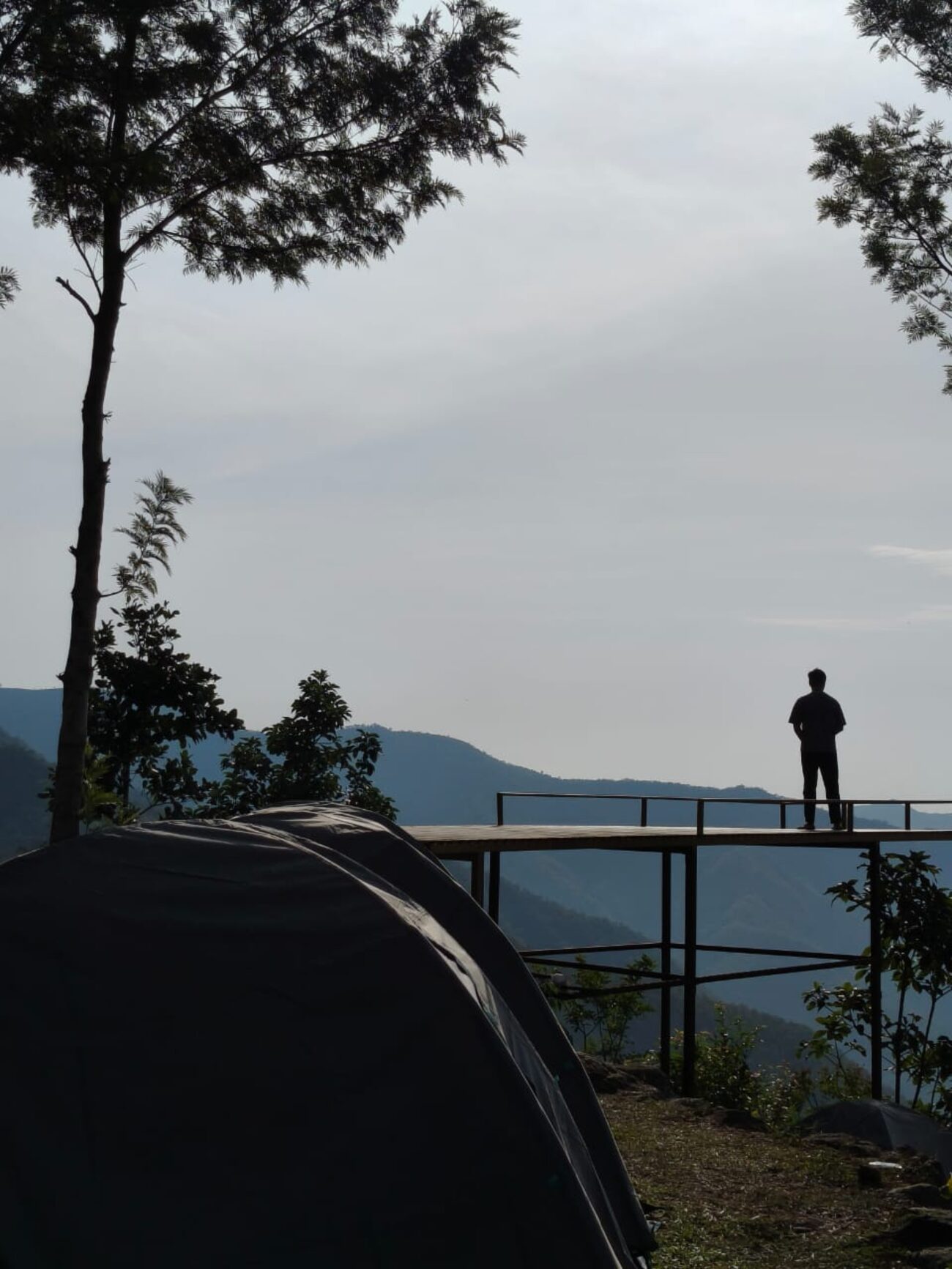
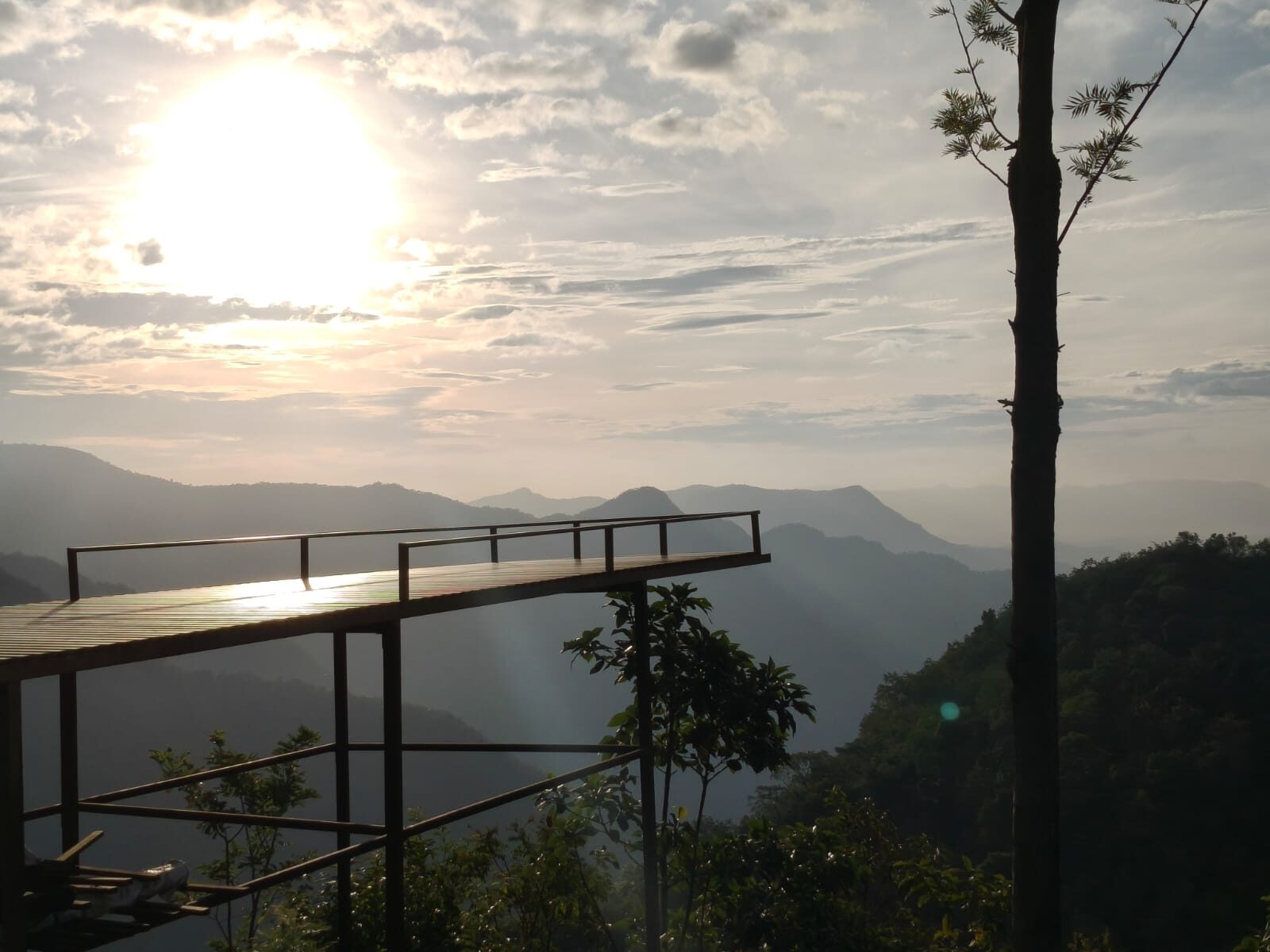
First light over the viewing deck at Old Kodai Camping, with mist filling the valleys below Vellagavi

Vellagavi · below Kodaikanal

Old Kodai Camping

Camp where Kodaikanal began.

A night in the clouds — in a 300-year-old sacred village, reached only on foot.

Descend

The place

Older than Kodaikanal itself

Long before the lake and the town above — built by British officers and American missionaries in 1845 — there was Vellagavi. When Lieutenant Ward first climbed up to survey these hills in 1821, Vellagavi was his base. People still call it Old Kodaikanal.

It has no road. For centuries the only way in has been the footpath — the same one villagers still use to carry their harvest to market and bring supplies home. A hamlet of a hundred-odd people and roughly two dozen shrines and temples, where the whole village walks barefoot on ground it holds sacred, and the day ends soon after sunset. You don't visit Vellagavi so much as slow down to its pace.

The camp sits at the village edge, on a spur above the cloud line.

The journey

A walk down, out of the noise

It starts behind Dolphin's Nose in Vattakanal and drops gently through shola forest to the village — about 3.5 km, an hour or two downhill. It's a walk, not a race: bring water and decent shoes, take it slow, and the path does the rest. For those who'd rather ride, the village horses can carry you.

  1. Vattakanalthe trailhead, high on the plateau
  2. Dolphin's Nosethe last view of the modern world
  3. Shola forestmist, birdsong, gooseberry trees
  4. Vellagavi villageshoes off — you've arrived
  5. The camptents on the spur, ~1,280 m
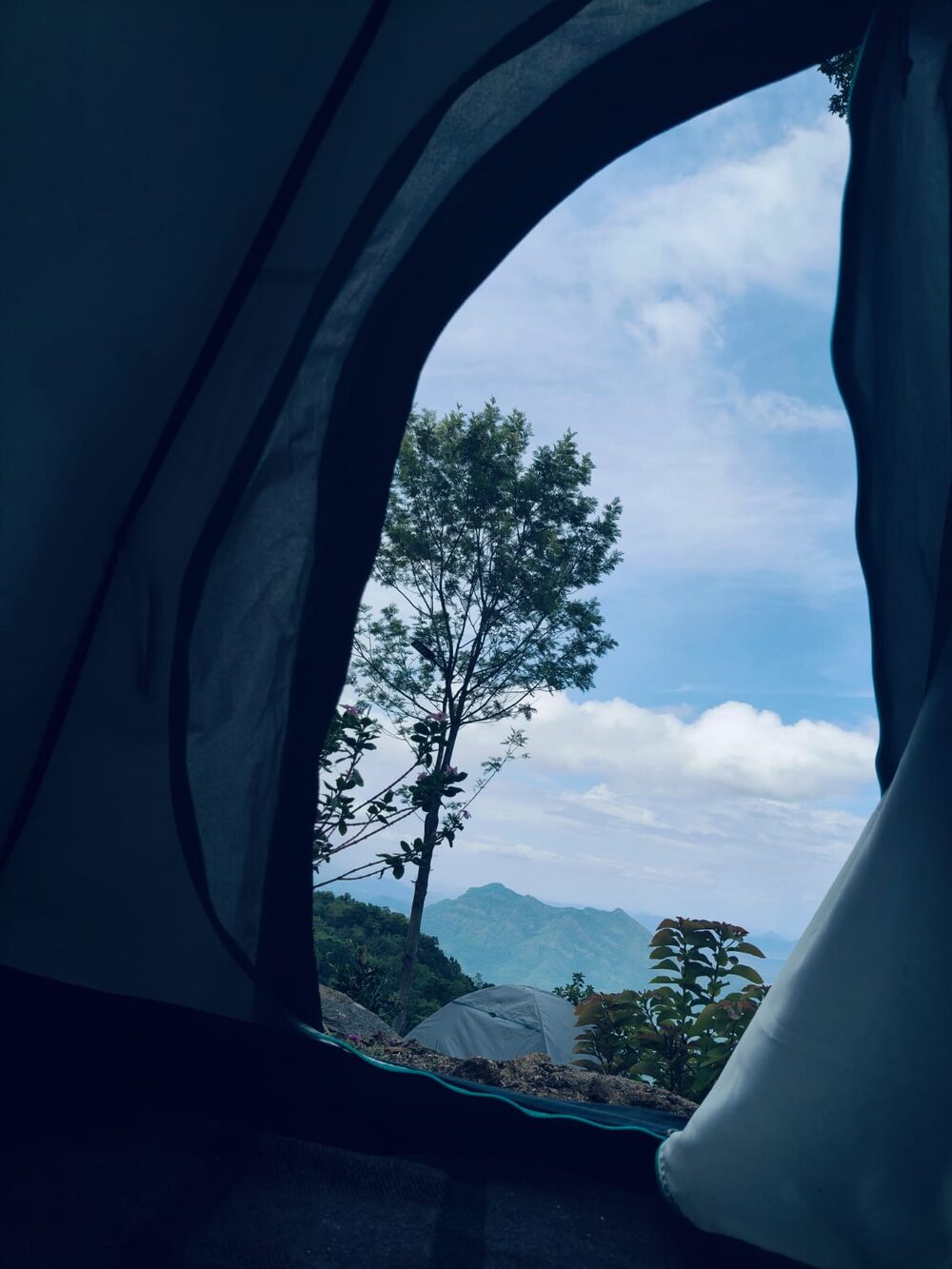
The view of mist-wrapped mountains framed by an open tent door at dawn
What you wake up to.

The stay

Everything you need, nothing you don't

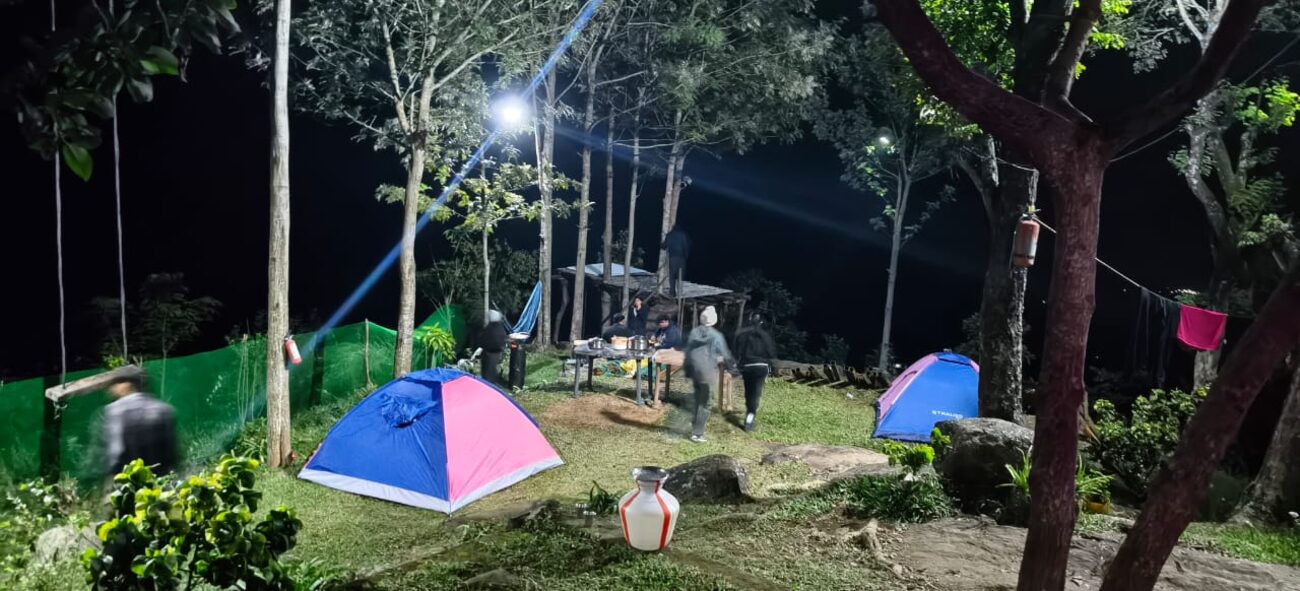
Comfortable, not complicated. The tents are pitched and waiting, the food is cooked over a village fire, and a guide walks the whole trail with you. The basics, done well, in a place that needs nothing added.

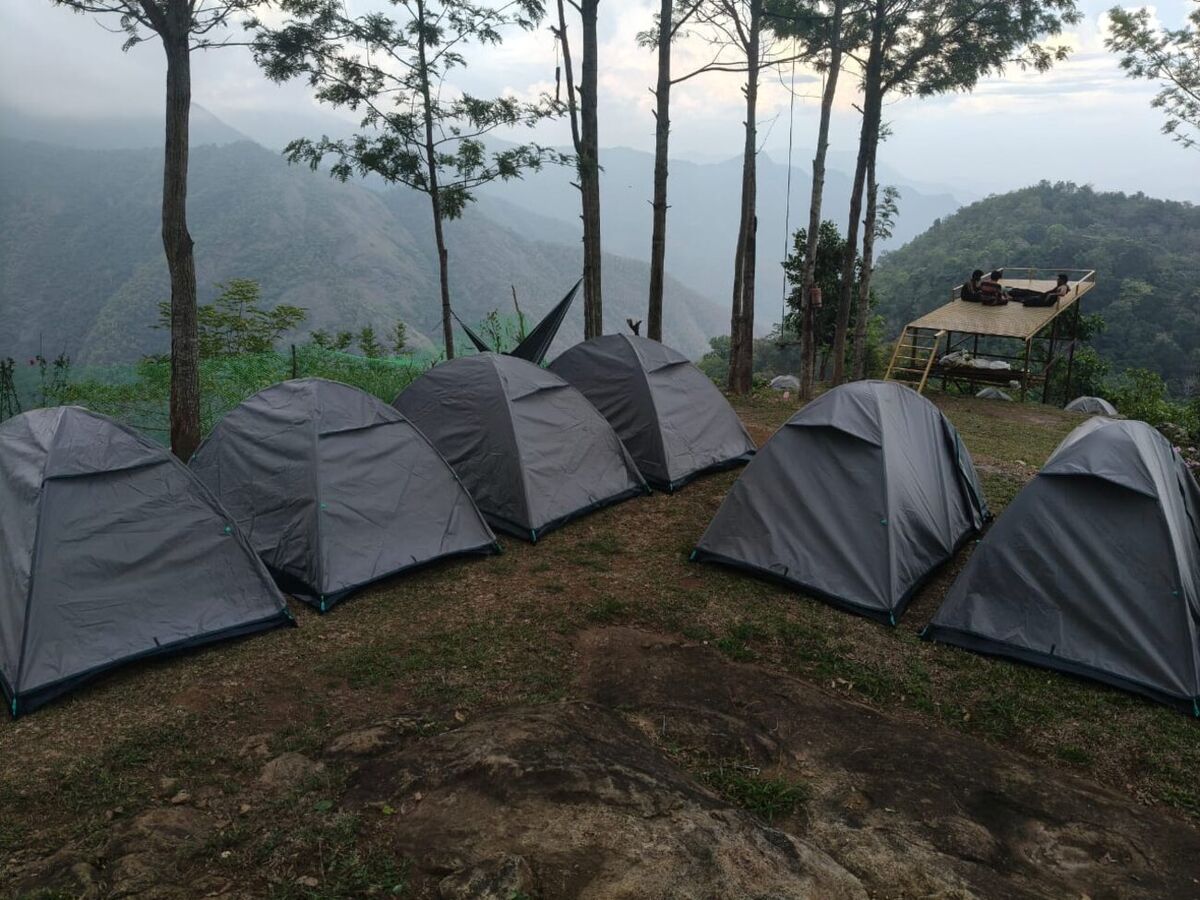
  • Ready-pitched tents

    Set up and waiting when you arrive, with bedding for a cool mountain night.

  • Home-cooked meals

    Dinner by the fire and breakfast at sunrise — simple village food, cooked fresh.

  • A guide, start to finish

    Someone who knows every turn of the path walks the whole trail with you, both days.

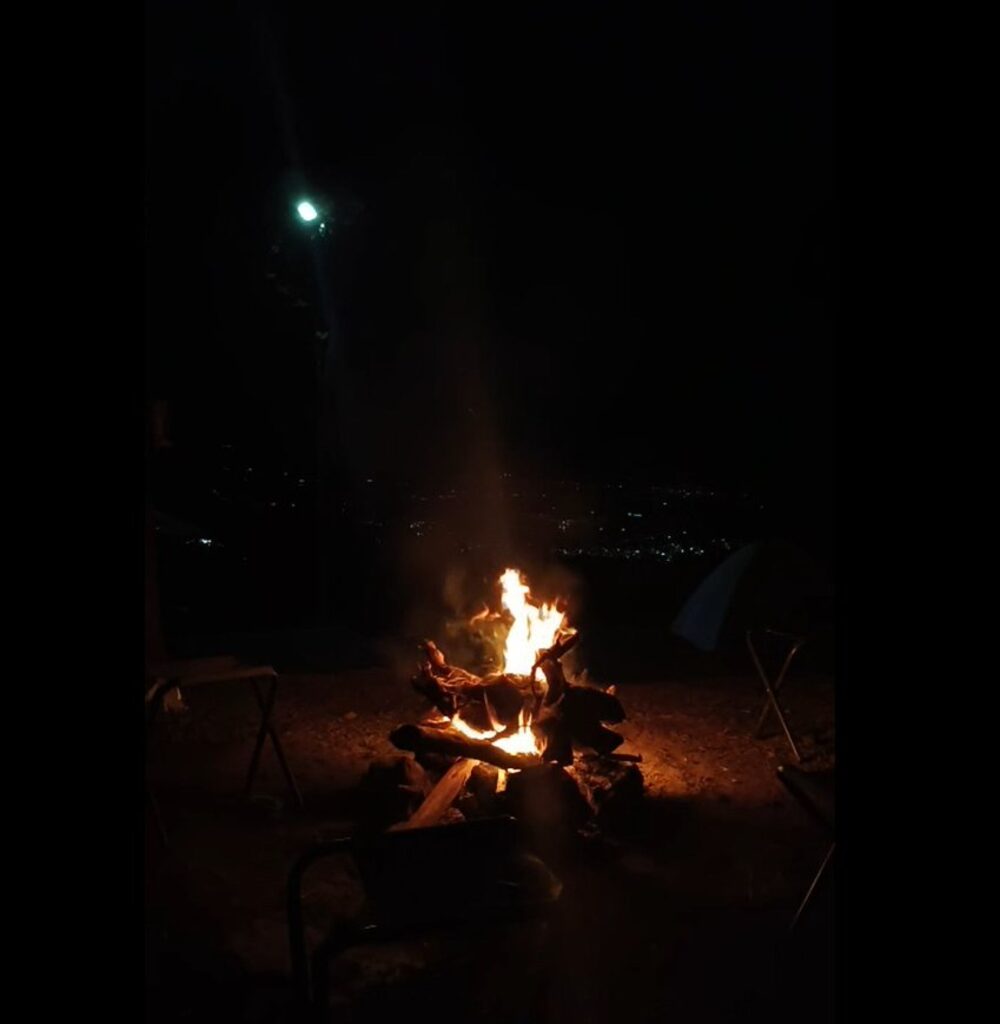
  • The campfire

    Lit each night, set away from the homes so the village sleeps undisturbed.

  • The sunrise deck

    A viewing platform with more than 270° over the ranges — the reason people wake early.

  • The quiet

    No traffic, no horns, no signal to speak of. That's the point.

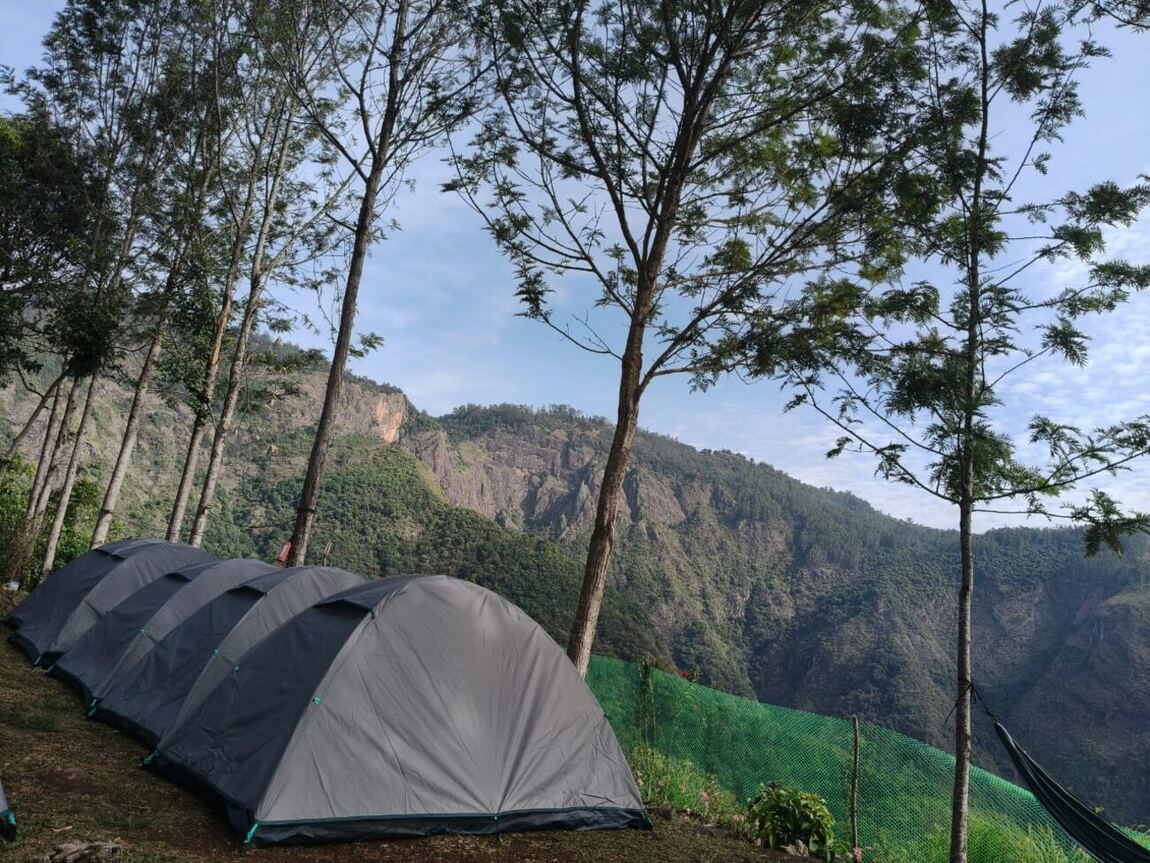
A neat row of camping tents on the grassy spur, mountains beyond

The plan

Two days, one night

A gentle descent in, a night above the clouds, then out the far side through the forest to Kumbakarai Falls — you finish lower than you started, so there's no long climb back.

Day 1

Vattakanal to Vellagavi

  • MorningArrive at Vattakanal (breakfast on your own).
  • 8:30 AMThe trek begins — formalities at Dolphin's Nose, then down the old trail through forest.
  • MiddayFresh black coffee waiting at the village; settle into camp, then a home-cooked lunch.
  • AfternoonWander the village and its little temples, then back to camp for sunset.
  • 8:30 PMDinner, then the campfire — stories, stargazing, the plains glittering far below.

Day 2

Vellagavi to Kumbakarai

  • SunriseWake to birdsong and first light, with a warm cup of black coffee.
  • After breakfastDescend the forest trail toward Kumbakarai Falls.
  • The fallsA dip and photos at Kumbakarai — then drop-off for your onward journey.

The forest

A sky island, kept wild

These are sky islands — pockets of cool forest stranded above the hot plains, holding birds and plants found nowhere else on earth. The shola woods in the valley folds work like sponges, storing the rain and feeding the rivers below. The health of these hills is the wealth of the plains.

Much of the old grassland was lost last century to planted wattle and pine — by one study, around two-thirds of it. What's left is worth protecting, and a camp on a surviving fragment has a real stake in keeping it. Listen for the sholakili, the little blue robin that sings only in these forests. Once every twelve years the higher ridges turn blue with neelakurinji in bloom — the next is due in 2030, and we'll be here.

Organised camping here runs on a Forest Department permit, under the state's registered trek scheme. We hold it, and we arrange yours.

Trusted by campers

A camp people come back for

  • 4.7★average from camper reviews
  • 190+reviews and counting
  • 9,400+following on Instagram
  • 12 yrsfamily-run, at the village edge
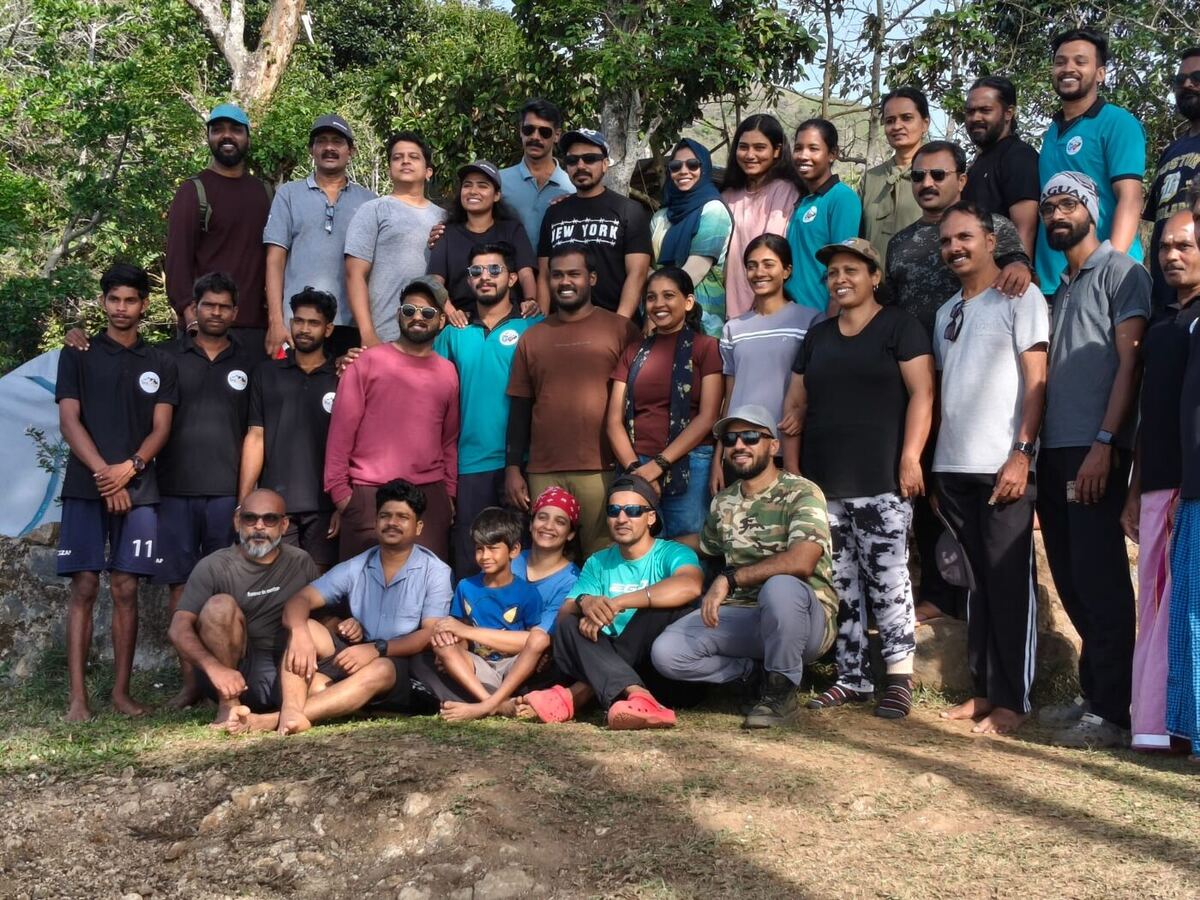
A large group of happy campers gathered at Old Kodai Camping after the trek
One morning's group at the camp.

“The sunrise from the hilltop was breathtaking — golden light breaking over misty mountains. They treated us like family.”

— from a camper's review

Stayed with us? Leave a Google review →

Plan your night

Spend a night where Kodaikanal began

Message us on WhatsApp for dates and the best price — it's the quickest way, and we'll come straight back to you.

Message us on WhatsApp
Check live dates & book →
Chat with us